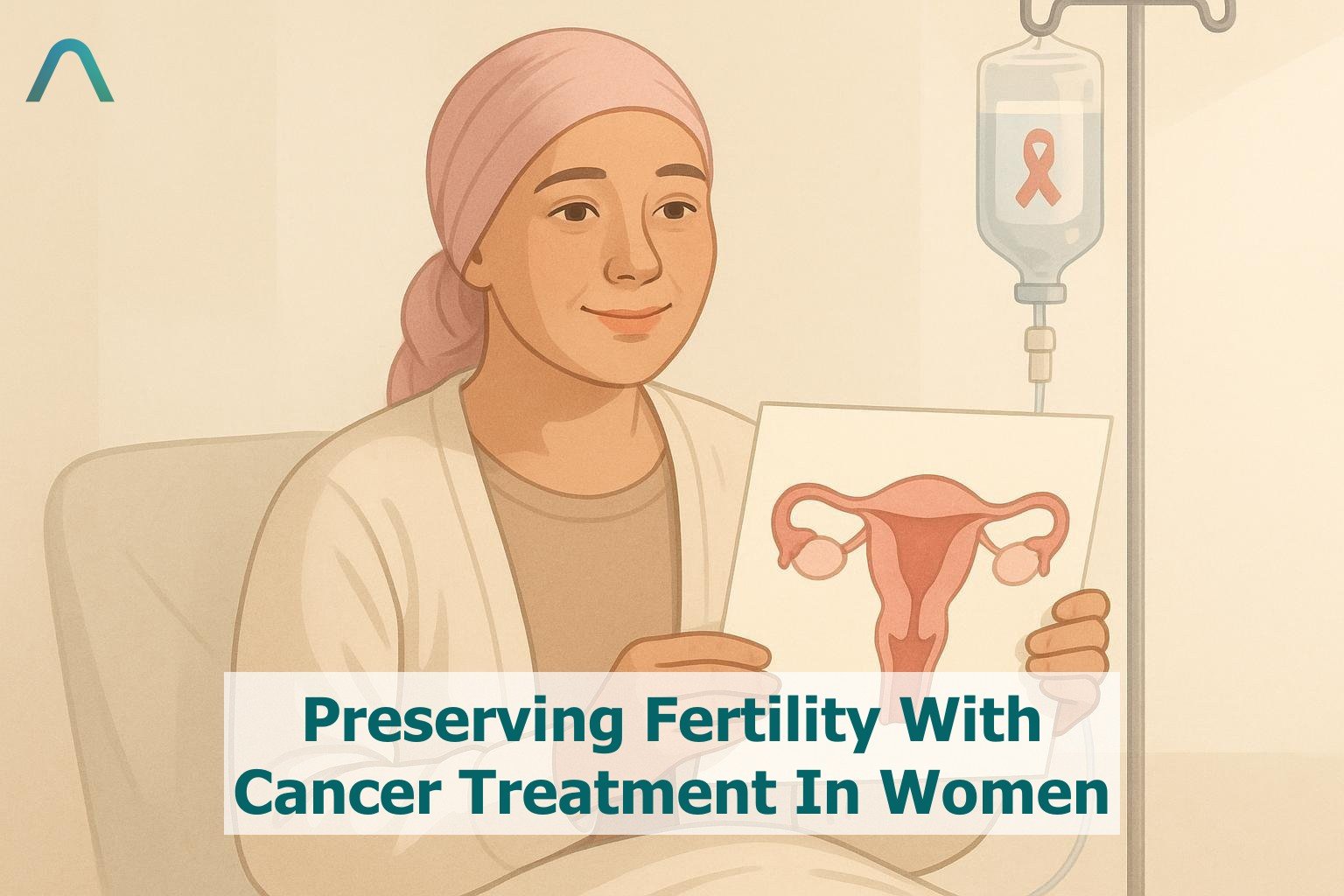
Preserving fertility with cancer treatment in women
Facing cancer is overwhelming. It is also okay to think about your future family at the same time. Preserving fertility means taking steps now to improve your chances of having biological children after treatment. You can explore options even if you are not ready to get pregnant soon.
What is fertility?
Fertility is your ability to get pregnant and carry a pregnancy. In women, this depends on healthy eggs, working ovaries, open fallopian tubes, and a uterus that can carry a pregnancy. Some cancer treatments can affect one or more of these parts.
How cancer treatment can affect fertility
- Chemotherapy: Medicines that kill or slow cancer cells can also damage eggs in the ovaries. This can lead to fewer eggs, irregular periods, or periods stopping for a time. The impact depends on the specific drugs, the dose, and your age.
- Radiation therapy: High-dose X-rays can harm the ovaries and, if aimed at the pelvis or abdomen, can also affect the uterus. This may lower egg supply and make it harder to carry a pregnancy. The risk depends on the location treated and total dose.
- Surgery: Removing the ovaries means you cannot get pregnant with your own eggs. Removing the uterus means you cannot carry a pregnancy. In some cases, surgeons can plan procedures to protect fertility, when it is safe for your cancer type.
Not everyone who gets chemotherapy or radiation will have fertility problems. Risks vary widely. Your oncology team can explain what is known for your treatment plan.
Planning ahead if you may want children someday
If possible, bring up fertility before treatment begins. Some steps take days to weeks and may affect timing.
- Tell your oncology team that fertility is important to you.
- Ask for a fast referral to a fertility specialist (a reproductive endocrinologist).
- Discuss whether any cancer treatment choices could lower the impact on fertility while still treating the cancer effectively.
- Ask about timing, safety, and whether treatment can start after a fertility-save step.
- Use reliable birth control during treatment if pregnancy is not recommended. Your team can suggest safe options.
Options to preserve fertility before treatment
Not every option is right for every person. Success rates and timing depend most on age, egg supply, and cancer treatment plan. Talk with your oncology and fertility teams together.
- Embryo freezing (embryo banking): Your eggs are collected, fertilized with partner or donor sperm in a lab, and embryos are frozen for later use. This usually takes 10 to 14 days. It has the longest track record.
- Egg freezing (oocyte cryopreservation): Eggs are collected and frozen unfertilized. You can choose a sperm source later. The timeline is similar to embryo freezing.
- Ovarian tissue freezing: A surgeon removes a small piece of ovarian tissue, which is frozen for potential use later. This can be an option when there is not enough time for egg collection or in younger patients. It is increasingly used, but availability and insurance coverage vary.
- Medicines to temporarily quiet the ovaries during chemotherapy: Hormone shots that pause ovarian function are being studied. They may lower the risk of early menopause in some cases. They are not a substitute for egg or embryo freezing. Discuss benefits and limits with your team.
Fertility procedures involve blood tests, ultrasounds, and short procedures to collect eggs or tissue. Side effects are usually mild, but risks exist. Your teams will review safety in the context of your cancer.
If you are getting radiation to the pelvis or belly
- Shielding: Special shields may protect nearby organs from scatter radiation when appropriate.
- Ovarian transposition: A surgery can move the ovaries out of the radiation field to reduce exposure.
- Uterus considerations: Radiation to the uterus can affect its ability to carry a pregnancy. Your team can explain risks and alternatives based on the radiation plan.
Radiation planning often uses techniques to limit dose to the ovaries and uterus when it is safe to do so. Ask your radiation oncologist what is possible for you.
During and after treatment
- Periods and symptoms: Your period may become irregular or stop. This can be temporary or permanent. Hot flashes or vaginal dryness can be signs of low estrogen.
- Testing ovarian reserve: Blood tests like AMH and FSH, and antral follicle counts on ultrasound, can give clues about egg supply. These tests are best interpreted by a fertility specialist.
- Timing pregnancy: The safest time to try for pregnancy depends on your cancer type and treatment. Always discuss timing with your oncology team.
- Contraception: You can still get pregnant even if your period stops. Use effective birth control during treatment if pregnancy is not advised.
Deciding what is right for you
The “best” option depends on your goals, your cancer plan, and your timeline. Consider the following and review them with your care teams.
- The benefits, limits, and risks of each option
- Whether you have a partner now or prefer to use donor sperm later
- How long each step takes and whether it could delay cancer treatment
- How likely the option is to work for your age and egg supply
- Costs for procedures and storage, and what your insurance covers
- How long you can store eggs, embryos, or tissue, and your plans if you do not use them
- Any genetic risks related to your cancer (ask about genetic counseling)
If pregnancy is not possible or not the right choice
- Donor eggs or donor embryos: You can try to become pregnant using donated eggs or embryos.
- Gestational carrier: Another person carries a pregnancy created with your embryo or donor egg.
- Adoption: Many people build families through domestic or international adoption, or foster-to-adopt.
- Support: Counseling and peer groups can help you process emotions and make choices that fit your values.
For teens and young adults
Fertility preservation can be urgent when treatment needs to start quickly. Options like egg or ovarian tissue freezing may be considered. Parents or guardians usually take part in these decisions. Ask for a pediatric or adolescent fertility specialist when needed.
Questions to ask your oncology and fertility teams
- Will my treatment affect my fertility, and how?
- Which fertility preservation options fit my diagnosis and timeline?
- How long would preservation take, and can treatment safely wait?
- What are the chances of success for me at my age?
- What are the costs and what might insurance cover?
- Who will coordinate between oncology and fertility clinics?
- When would it be safe to try for pregnancy after treatment?
Resources and helpful websites
Last reviewed: 2025-12-04